Kansas City City Hall Corruption Questions Grow as FBI Scrutiny Exposes Accountability Crisis
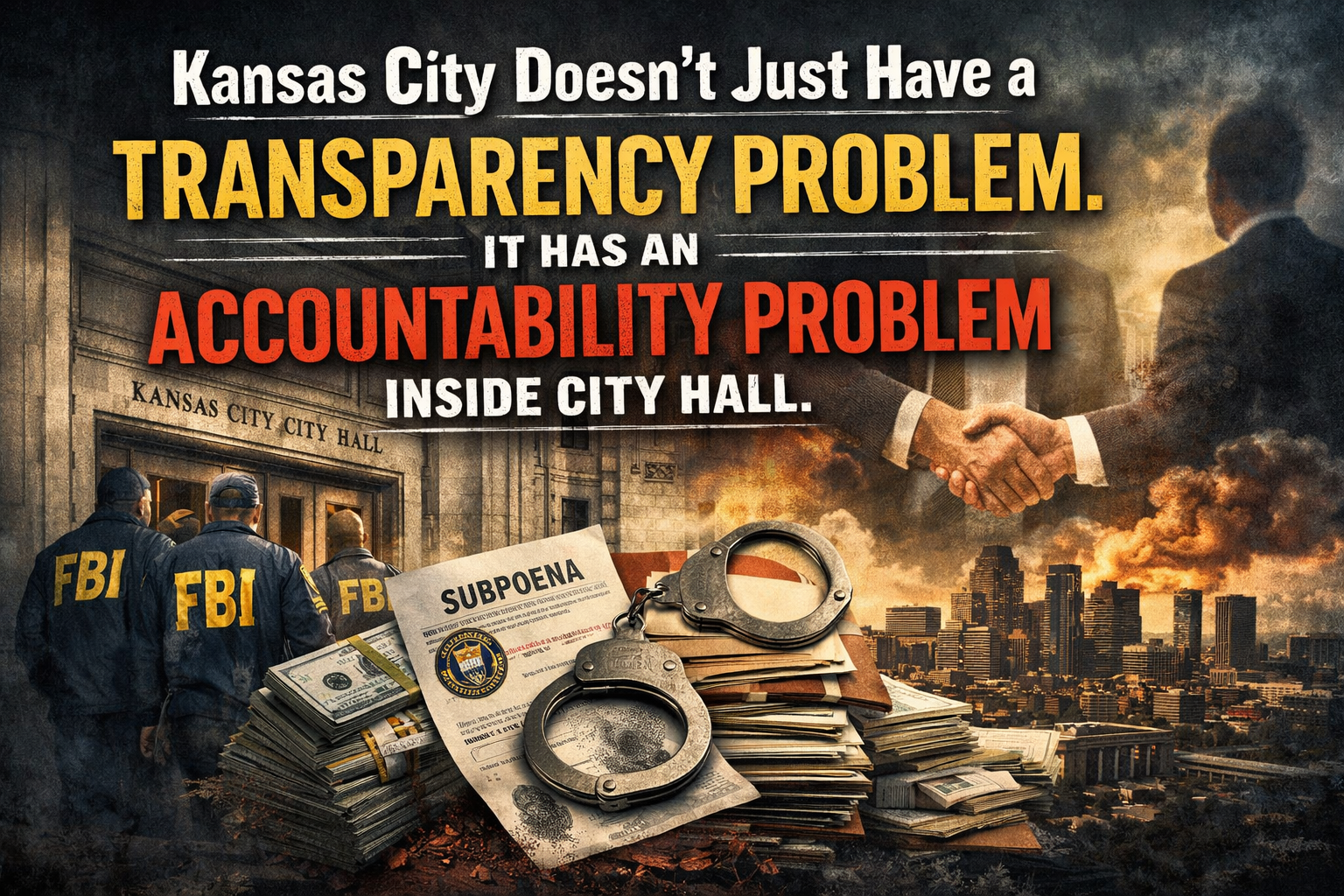
Kansas City doesn’t just have a transparency problem. It has an accountability problem inside City Hall.
Because when reports surface that the FBI is examining allegations involving the mayor pro tem, her husband, campaign contributions, city permits, contracts, and related city dealings, the public gets some version of the same tired line: nobody knows anything, nobody saw anything, and nobody can say anything.
That is not accountability. That is the language of a protected political class.
According to recent reporting, the controversy centers on allegations that Public Works Director Michael Shaw solicited campaign contributions for Ryana Parks-Shaw from people with business pending before the city, including permit matters. Reporting also said the FBI subpoenaed city records months earlier and that the city was conducting an internal investigation.
Let’s be clear: an investigation is not a conviction. Allegations are not proof. No criminal charges were reported in the coverage reviewed. But that is not the point the public should be missing. The point is that once City Hall is tied to this kind of federal scrutiny, the burden should shift immediately to radical transparency. Instead, Kansas City residents got distance, denials, and the same old institutional shrug.
And that is exactly why many people distrust City Hall.
Because this story is not just about one elected official or one department head. It is about whether insiders appear to operate by one set of rules while taxpayers, business owners, neighborhoods, and ordinary residents operate by another.
If you are a small business owner in Kansas City, you know the feeling. The city can bury you in process, delay, fees, inspections, permits, mixed messages, and bureaucratic nonsense. But if you are politically connected, the public is left wondering whether the rules are flexible, the doors open faster, and the lines between public duty and political ambition get blurred.
That is the real poison here.
Not just whether federal investigators ultimately file charges.
Not just whether one allegation is sustained or disproven.
But whether Kansas Citians are looking at a government where access, influence, and insider relationships matter more than fairness, merit, and ethics.
Mayor Pro Tem Ryana Parks-Shaw has publicly denied wrongdoing and said she has not been contacted by federal officials. Her husband is likewise entitled to the presumption of innocence. KSHB also reported that one federal subpoena it reviewed did not name Parks-Shaw or Michael Shaw and instead sought records tied to a homeless advocate and related contracts and dealings with the city.
Fine. Then open the books.
If the allegations are false, prove it with records.
If the reporting is incomplete, clarify it with records.
If City Hall has nothing to hide, stop hiding behind process and start producing facts.
Kansas City taxpayers deserve answers to basic questions:
Who was asked for money?
Who had pending permits or city business at the time?
What contracts were awarded, to whom, and under what process?
Who inside City Hall knew about the federal scrutiny, and when?
Why was the public left in the dark?
Why does it always feel like accountability arrives last, if at all?
And here is the ugliest part: even now, the instinct at City Hall seems to be containment, not candor.
That is why public trust keeps eroding.
That is why people start assuming corruption before competence.
That is why every new scandal feels less like an exception and more like a window into how this place really works.
Kansas City does not need more statements.
It does not need more carefully worded denials.
It does not need more politicians acting offended that the public is asking questions.
It needs a full airing of the facts.
Because when subpoenas have been issued, city employees have reportedly been interviewed, and the public still gets fog instead of answers, the problem is no longer just the allegation.
The problem is whether City Hall is willing to submit itself to the same scrutiny everyone else faces.
And if City Hall wants people to believe this is all clean, then it needs to do something it almost never does:
Show the receipts.
Release the records.
Answer the questions.
Accept the scrutiny.
Until then, Kansas City has every reason to keep asking whether, inside City Hall, power protects power, insiders protect insiders, and accountability is for everyone except the people at the top.